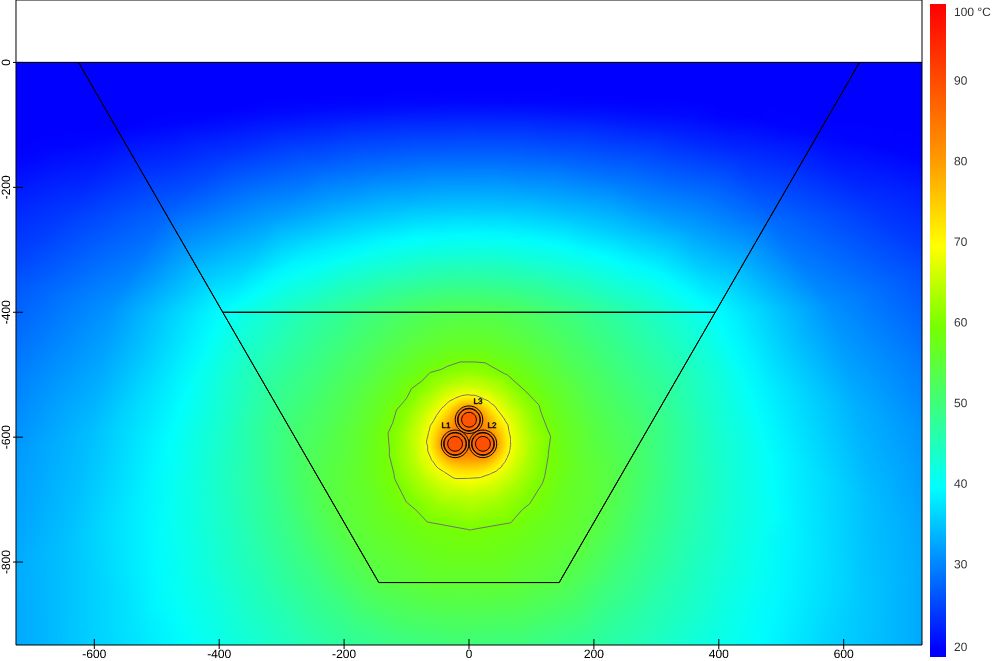
After another record-warm summer in Europe, drying of cable backfill soil is becoming a real problem. Dry soil reduces heat transfer away from the cable, Consequently, as the soil dries out, the current-carrying capacity of power cables (ampacity) decreases.
Dry-out of the soil near power cable installations starts after the soil reaches a critical temperature at which outward moisture migration exceeds inward water flow. Although this process may take several weeks or even months, the consequences are desaturated dry-out zones which are characterized with much higher thermal resistivity than saturated soil. During summer and for power cables operating at their peak load, this process will impact the current carrying capacity.
To quantify the effect of drying for different backfill materials, REN together with SINTEF Energy, the largest independent research organization in Scandinavia, has conducted field and laboratory experiments, which resulted in development of dry-out curves for different soil types.
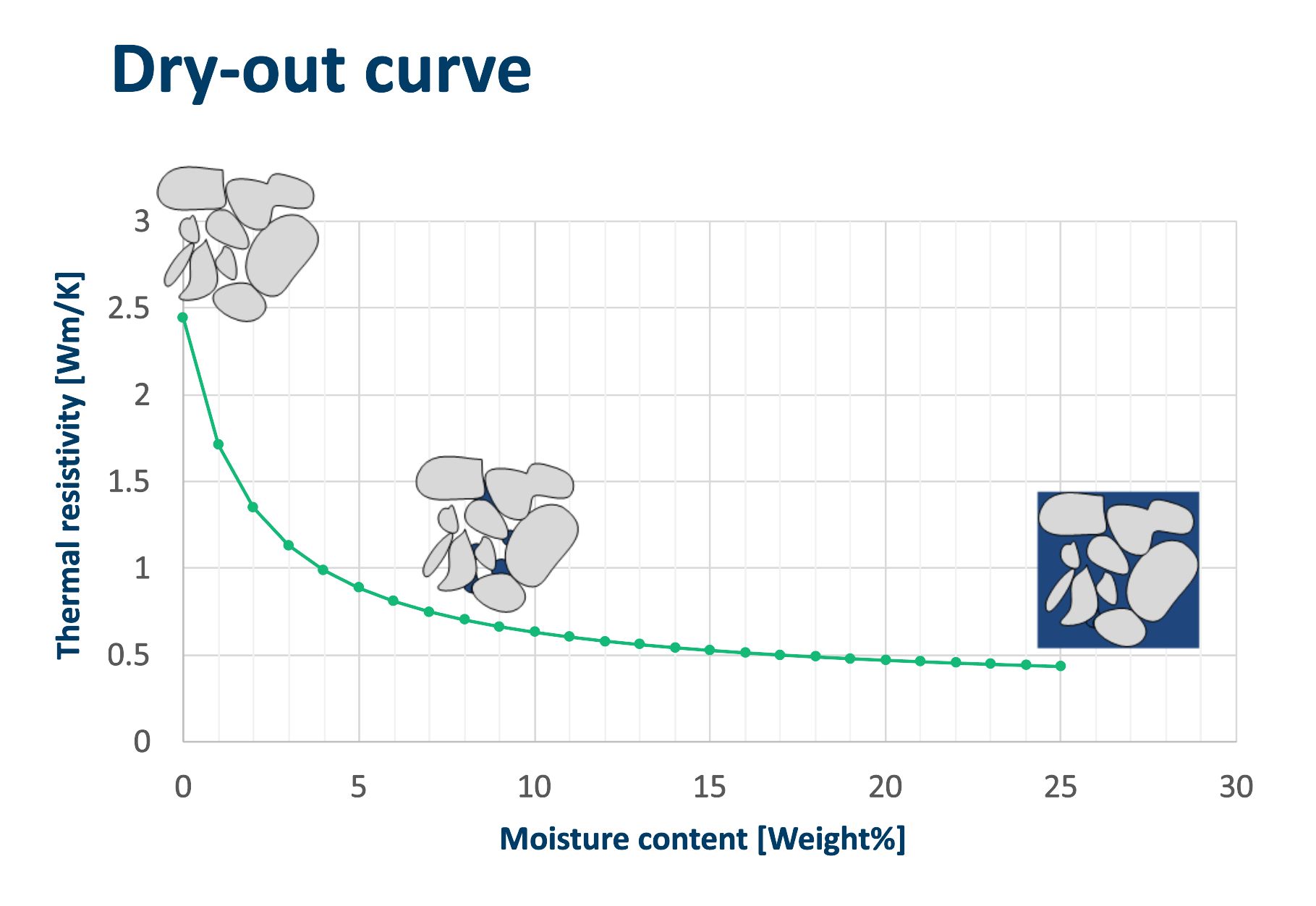
These results can be applied in the Grøft Design software to reflect more realistic conditions for ampacity calculations. Multiple dry-out zones may be modelled to capture the nonlinear transition in thermal resistivity variation. This improves the current limitation of the IEC standard to model two zones only. Furthermore, the dry-out zones may be modelled for multiple cables in parallel.